


 Send Inquiry
 08045815677

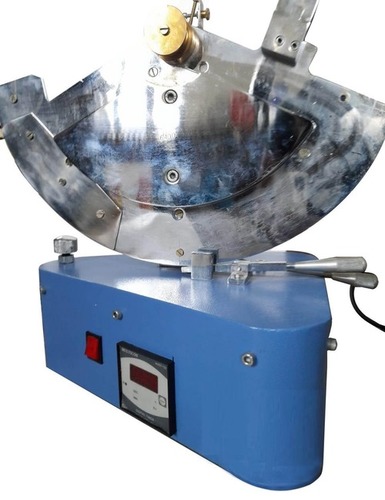
TEARING STRENGTH TESTER
Product Details:
- Accuracy 1% of Reading
- Application Textile, Paper, Film, Plastic, Leather testing
- Humidity Up to 85% RH (Non-Condensing)
- Number of Specimens 1 at a time
- Port Size 1/4 inch
- Hardness Standard Steel Construction
- Response Time Instantaneous (within milliseconds)
- Click to view more
X
TEARING STRENGTH TESTER Product Specifications
- Microprocessor based, Large LCD, Automatic calculation, Multiple units
- 230 V AC, 50 Hz
- Semi-Automatic
- 0.6 MPa
- 0-32 N (Newton)
- 0-32 N (Customizable)
- Table Top
- RS232/USB
- Tearing Strength Tester
- Approx. 500 mm
- Textile, Paper, Film, Plastic, Leather testing
- 1% of Reading
- Standard/Adjustable 200 mm/min
- 50 mm
- 8N, 16N, 32N (Multiple pendulums available)
- 100 mm
- Up to 85% RH (Non-Condensing)
- Instantaneous (within milliseconds)
- Standard Steel Construction
- LCD Digital Display
- Manual/Pneumatic
- 1 at a time
- Approximately 50 kg
- Testing fabric/paper/film tear strength
- 1/4 inch
- 220-240V AC
- 63 mm x 75 mm
- 50 Hz
- 0.01 N
- 15C - 35C (Operating)
- Removable, provides multiple capacities
- Provided with NABL traceable calibration certificate
- Powder coated corrosion-resistant body
- Digital, can be connected to PC and printer
- Overload & over-travel protection
- Adjustable for various specimen thicknesses
- Export quality with shock-proof protection
- Yes, for accurate sample preparation
- ASTM D1424, ISO 1974, TAPPI T414
Product Description
Anadjustable knife is also mounted on the pendulum upper bracket is centeredbetween the two clamps & is used for making the initial slit in the testspecimen.
A check weight is supplied with thetester for verification of the scale.
Theinstruments is finished is metallic painting and bright chrome plating to giveit a corrosion resistant finish
Precision Testing for Diverse Materials
Engineered to deliver highly accurate tear strength measurements, this tester accommodates textiles, paper, films, plastics, and leather. Its adjustable grips support various specimen thicknesses, and compliance with international standards ensures reliability in quality control settings.
Advanced Safety and User-Friendly Features
With built-in overload and over-travel protection, operators enjoy enhanced safety during testing. The intuitive LCD display, microprocessor controls, and instant response time streamline workflows, while automatic calculations minimize manual errors.
Superior Build and Calibration Assurance
A powder-coated, corrosion-resistant body guarantees long-term durability. Each unit is shipped with a NABL traceable calibration certificate, ensuring consistent measurement precision and compliance with laboratory best practices. Export-grade packaging protects the equipment during transit.
FAQ's of TEARING STRENGTH TESTER:
Q: How does the pendulum mechanism work in the tearing strength tester?
A: The pendulum mechanism initiates tearing force on the specimen, measuring the energy required to tear materials like textiles, films, and paper. Removable pendulums (8N, 16N, 32N) allow precise adjustment for different test ranges and applications.Q: What are the benefits of the NABL traceable calibration certificate provided with the equipment?
A: Users receive a NABL traceable calibration certificate, assuring test accuracy and compliance with national and international standards. This certification enables confidence in recorded data, supports audits, and validates laboratory procedures.Q: When should the cutting template included be used?
A: The cutting template should be utilized before each test to prepare specimens to the standard size (63 mm x 75 mm), ensuring consistency and reliability in tear strength results according to ASTM, ISO, and TAPPI protocols.Q: Where can the tester be used and what types of specimens does it support?
A: This equipment is ideal for textile factories, paper mills, plastic manufacturers, research labs, and quality assurance departments. Its adjustable grips and control modes accommodate varied materials like textiles, paper, film, leather, and plastic.Q: What process steps are involved in operating the tearing strength tester?
A: Operation involves specimen preparation using the template, clamping the sample in adjustable grips, setting the desired pendulum capacity, and initiating the test manually or pneumatically. Results are displayed digitally and can be transferred to a PC or printer.Q: How does the device ensure operator safety during usage?
A: Safety is maintained through overload and over-travel protection features, which prevent damage to the equipment and reduce risk to users. The robust steel construction and secure, adjustable grips further enhance operational safety.Q: What are the key usage and benefit highlights of this tearing strength tester?
A: Key advantages include rapid digital measurement (resolution: 0.01 N), automatic calculation of results, compliance with global standards, flexible test capacities, and robust build for repeatable, accurate tear strength testing.Tell us about your requirement

Price:
Quantity
Select Unit
- 50
- 100
- 200
- 250
- 500
- 1000+
Additional detail
Mobile number
Email

Other Products in 'Testing Machine' category


ASIAN TEST EQUIPMENTS
ISO 9001 : 2008
ISO 9001 : 2008

- Factory Office: F-23, MGR UPSIDC Indl. Area, Hapur - 201015, Uttar Pradesh, India
- Phone : 08045815677

- Mr Aslam Islam (Managing Director)
- Mobile : 08045815677
- Send Inquiry
- our Associate Concern for Export Business
Asian Impex Deals in import and export Business of testing equipments.
Sales office : F-49 , MG Road UPSIDC Industrieal Area, Ghazibad-201015 UP
Mobile :+91 9136801813, +919639822172

|

 Send Inquiry
 Send SMS
ASIAN TEST EQUIPMENTS
All Rights Reserved.(Terms of Use)
Developed and Managed by Infocom Network Private Limited.
Developed and Managed by Infocom Network Private Limited.

